
HDPE GEOMEMBRANE
HDPE Geomembrane for Containment and Lining Systems
HDPE geomembrane is a polyethylene barrier material used in containment and lining systems for environmental, water, mining, industrial and civil engineering applications. Final material selection should be based on project conditions, design requirements and confirmed technical specifications.
PRODUCT OVERVIEW
Barrier Material for Engineered Containment Systems
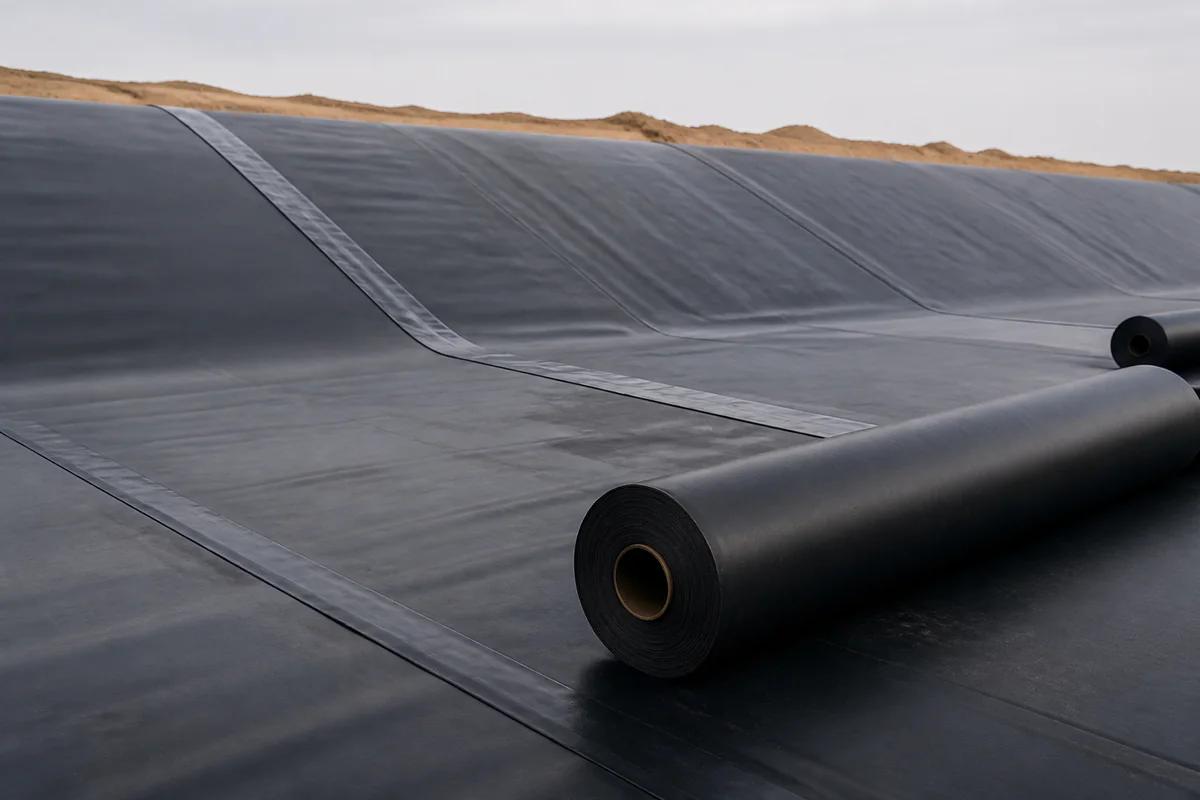
The current smooth HDPE geomembrane range includes GH-1 and GH-2S. Both grades use HDPE raw material and blown-film production, while GH-2S features smooth, even surfaces on both sides.
Dimensions and referenced technical requirements differ by grade. For procurement review, identify the required grade, nominal thickness, roll dimensions, applicable requirement set and project documentation needs in the inquiry.
APPLICATIONS
Typical HDPE Geomembrane Application Contexts
Smooth HDPE geomembrane can be considered for the lining and anti-seepage applications below. Grade selection and installation details should be coordinated with the complete engineering design and site conditions.
Municipal & Environmental Works
Barrier and anti-seepage applications within municipal and environmental engineering systems.
Water Conservancy Lining
Anti-seepage lining for water-conservancy projects, with grade selection aligned to the design requirements.
Landscape Water Features
Lining for landscaping and waterscape anti-seepage applications within an engineered system.
Transport Infrastructure
Anti-seepage applications associated with transportation infrastructure and related civil works.
Agricultural Water Projects
Barrier and lining applications for agricultural water-conservancy projects.
Aquaculture
Water-retention and anti-seepage lining for aquaculture systems, with material selection aligned to project conditions.
TECHNICAL PARAMETERS
HDPE Geomembrane Grades and Technical Parameters
GH-1 and GH-2S are separate smooth grades with different dimensional ranges and referenced requirements. The detailed table below applies specifically to GH-2S smooth HDPE geomembrane.
- Material
- HDPE raw material; blown-film production for GH-1 and GH-2S
- Thickness
- GH-1: 0.1–3.0 mm; GH-2S: 0.5–3.0 mm. Detailed GH-2S table: 0.75–3.0 mm
- Width
- GH-1 and GH-2S: 1–12 m
- Roll Length
- According to engineering design and customer requirements
- Surface
- GH-2S: smooth, even surfaces on both sides
- Applicable Standards
- GH-1: GB/T17643-2011, JT/T518-2004. GH-2S: GB/T17643-2011, CJ/T234-2006, GRI-GM13
GH-2S Smooth HDPE Geomembrane
The GH-2S technical table covers nominal thicknesses from 0.75 to 3.0 mm. Values marked with ≥ are minimum requirements for this GH-2S smooth grade table.
| Property | 0.75 mm | 1.0 mm | 1.25 mm | 1.5 mm | 2.0 mm | 2.5 mm | 3.0 mm |
|---|---|---|---|---|---|---|---|
| Density g/cm³ | ≥ 0.940 | ||||||
| Tensile yield strength, MD & CD N/mm | ≥ 11 | ≥ 15 | ≥ 18 | ≥ 22 | ≥ 29 | ≥ 37 | ≥ 44 |
| Tensile breaking strength, MD & CD N/mm | ≥ 20 | ≥ 27 | ≥ 33 | ≥ 40 | ≥ 53 | ≥ 67 | ≥ 80 |
| Yield elongation, MD & CD % | ≥ 12 | ||||||
| Elongation at break, MD & CD % | ≥ 700 | ||||||
| Right-angle tear load, MD & CD N | ≥ 93 | ≥ 125 | ≥ 160 | ≥ 190 | ≥ 250 | ≥ 315 | ≥ 375 |
| Puncture resistance N | ≥ 240 | ≥ 320 | ≥ 400 | ≥ 480 | ≥ 640 | ≥ 800 | ≥ 960 |
| Carbon black content % | 2.0–3.0 | ||||||
| Standard OIT min | ≥ 100 | ||||||
| High-pressure OIT min | ≥ 400 | ||||||
| Oven aging at 85°C standard OIT retained after 90 days, % | ≥ 55 | ||||||
| UV resistance OIT retained after 1600 hours, % | ≥ 50 | ||||||
On smaller screens, scroll horizontally within the table. GH-1, textured grades and GRI-GM13 reference data use separate requirement sets and are not combined with the GH-2S values shown here.
GRI-GM13 smooth reference table — listed test methods: identify the applicable requirement set and test methods in the project specification.
- Thickness: ASTM D5199
- Density: ASTM D1505 / D792
- Tensile: ASTM D6693, Type IV
- Tear: ASTM D1004
- Puncture: ASTM D4833
- Stress crack: ASTM D5397
- Carbon black: ASTM D4218
- OIT: ASTM D3895 / D5885
- Oven aging: ASTM D5721
- UV resistance: ASTM D7238
ENGINEERING CONSIDERATIONS
Material Selection Within the Complete Lining System
Project teams should assess the geomembrane together with adjacent materials, site preparation, installation planning and operating conditions.
Containment requirements
Define the intended barrier function, service context and project-specific containment criteria.
Subgrade and site conditions
Review surface preparation, settlement potential, access and the installation environment.
Slope and interface behavior
Evaluate geometry and adjacent material interfaces where the lining system includes slopes.
Puncture and protection requirements
Consider protection layers and construction exposure within the complete system design.
Welding and installation planning
Double-rail and extrusion-fusion welding equipment is used for geomembrane jointing. Welding procedures, equipment settings, seam testing and acceptance criteria should follow the approved project method statement and quality plan.
Environmental and chemical exposure
Identify the expected exposure conditions for review against the confirmed product specification.
MANUFACTURING & QUALITY
Production and Quality-Control Resources
Production and laboratory equipment for the product range includes blown-film production, thickness measurement, hydrostatic-pressure testing, thermal analysis, tensile testing and UV-aging evaluation. The inspection scope, sampling plan and required quality records should be defined for the selected grade and order requirements.
Review Manufacturing & Quality OverviewTECHNICAL DOCUMENTATION
Documentation for Product Selection and Procurement
Technical and procurement documentation should be aligned with the selected grade, project specification and order requirements. Include required document types, revisions and acceptance criteria with the inquiry so the proposed document package can be reviewed before order confirmation.
Product Grade & Specification
Identify GH-1 or GH-2S together with the required dimensions and applicable requirement set.
Test Method Reference
Where GRI-GM13 requirements are specified, identify the applicable test methods and acceptance requirements in the project documents.
Technical Data Requirements
List any project-specific data-sheet format, revision or technical submittal requirements with the inquiry.
Inspection & Quality Records
Define the inspection, traceability and quality-record requirements that should be reviewed for the order.
Installation & Welding Requirements
Coordinate panel layout, welding method, seam testing and acceptance requirements with the responsible installation and quality teams.
PRODUCT FAQ
Planning an HDPE Geomembrane Inquiry
These answers provide general procurement context and do not replace the project specification or engineering review.
How is HDPE geomembrane thickness selected?
GH-1 is available from 0.1–3.0 mm and GH-2S from 0.5–3.0 mm; the detailed GH-2S table covers 0.75–3.0 mm. Selection should follow the project design, site conditions, adjacent layers and applicable requirement set.
What information is needed for a quotation?
Share the application, required grade or dimensions, quantity, delivery destination, project schedule and any available specification or documentation requirements. Items not yet defined can be identified during the technical review.
Can specifications be matched to project requirements?
Project requirements can be reviewed against the published grade information and technical parameters on this page. Final acceptance should follow the project specification and the responsible technical review process.
How should technical documentation be specified?
Provide the required document list, applicable standards, revisions and issue-status requirements with the inquiry. Document availability and the agreed order package should be reviewed before procurement.
What should be considered before installation?
Review subgrade preparation, access, panel planning, interfaces, protection layers, weather conditions, welding procedures and the project quality-control plan.
PROJECT & PRODUCT INQUIRY
Discuss Your HDPE Geomembrane Requirements
Share the application, selected grade or required dimensions, quantity, destination, project schedule and applicable specification. The SLG team can review the requirement and coordinate product and documentation details for the next technical discussion.