
STAPLE FIBER NONWOVEN GEOTEXTILE
Staple Fiber Needle-Punched Nonwoven Geotextile for Separation, Filtration and Drainage
A PP- or PET-staple-fiber needle-punched nonwoven geotextile for separation, filtration, drainage, reinforcement and protection in civil and environmental engineering applications.
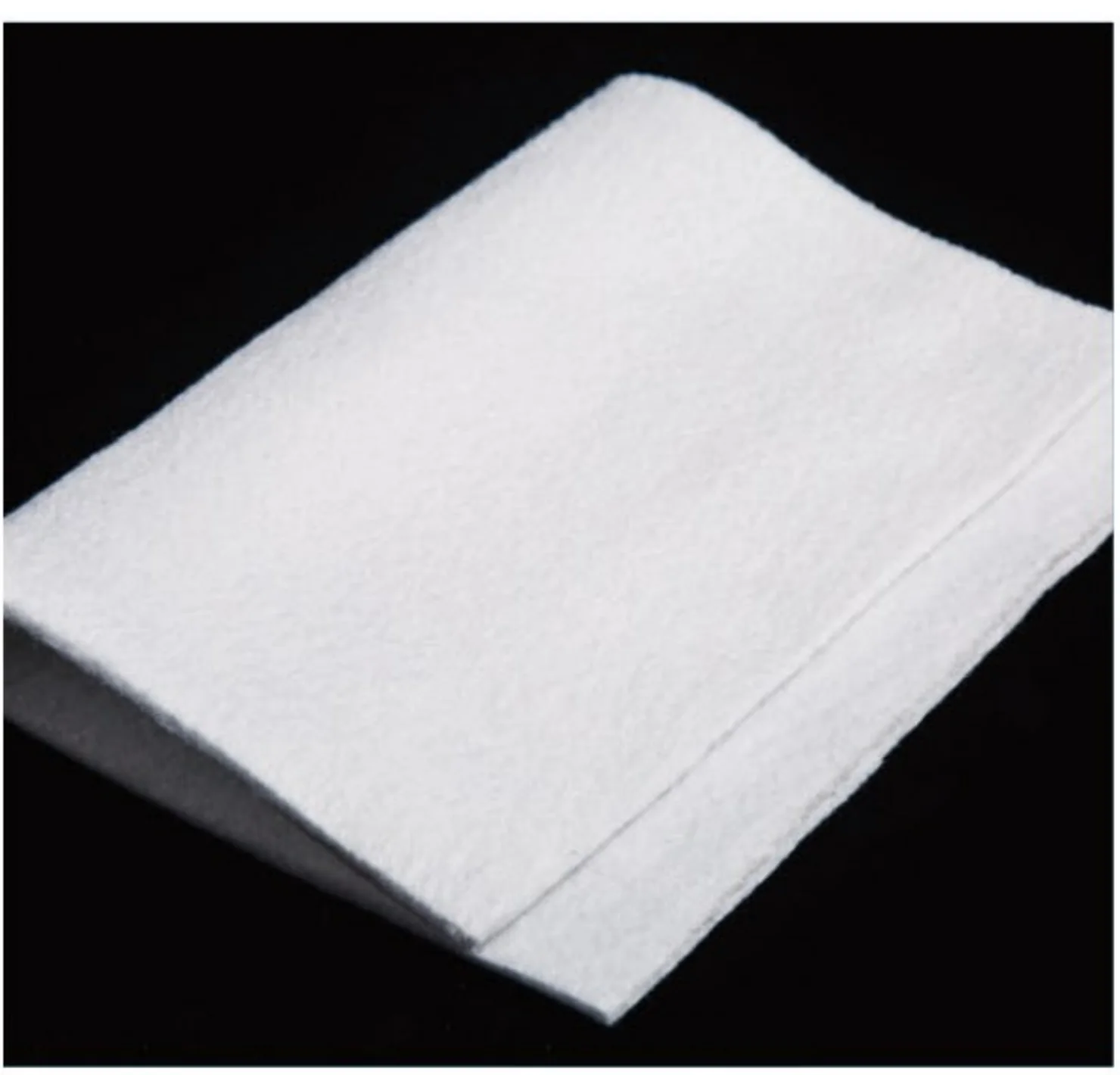
PRODUCT OVERVIEW
Nonwoven Geotextile for Filtration, Separation and Protection
The listed raw-material basis is PP or PET staple fiber, formed into a needle-punched nonwoven geotextile. Its functions include separation, filtration, drainage, reinforcement and protection.
Polymer material requirement, performance class, roll dimensions and acceptance criteria should be confirmed for the specific project and order.
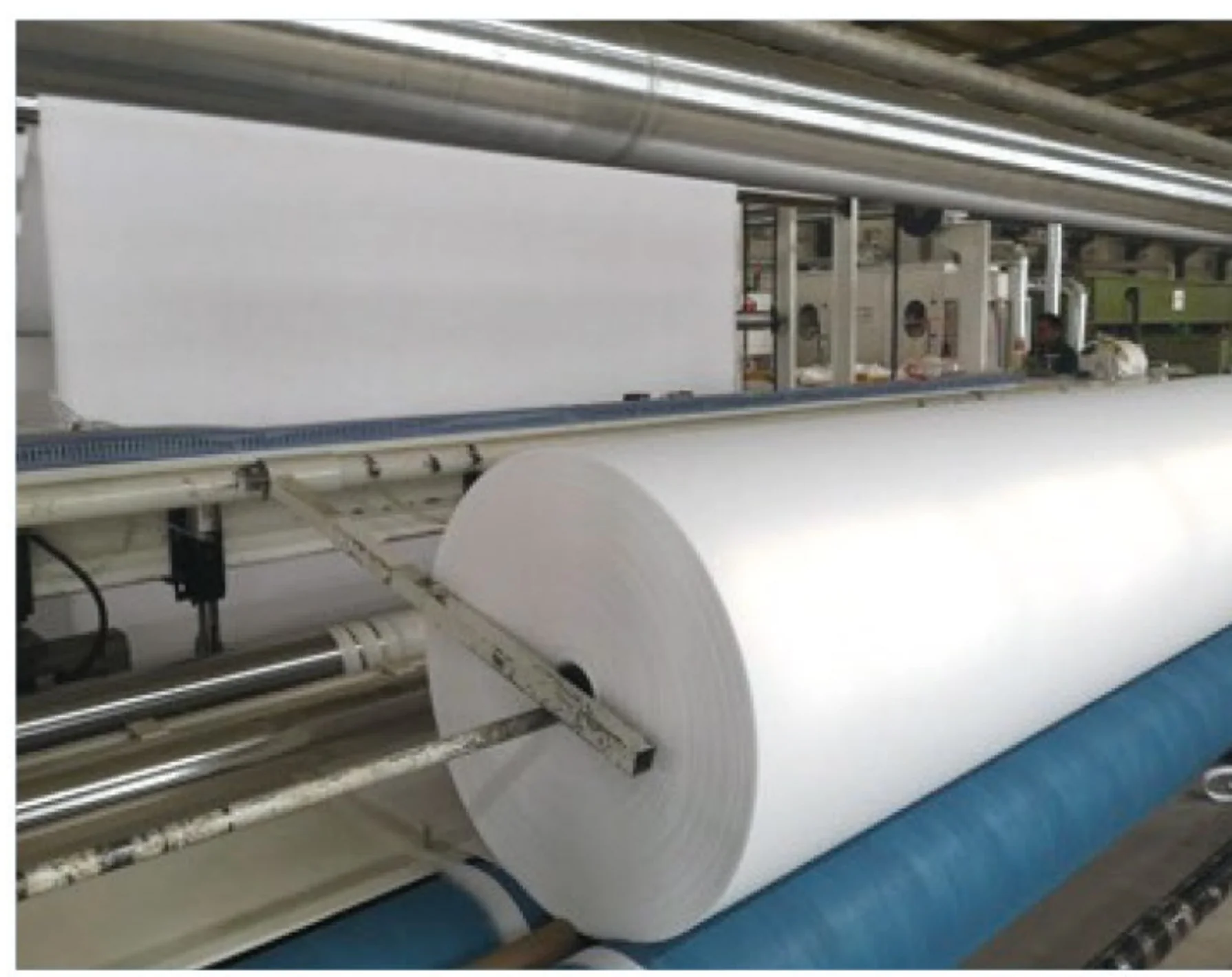
MATERIAL & NONWOVEN STRUCTURE
Staple-Fiber Material Formed Through Needle-Punched Construction
The product is presented as a needle-punched nonwoven material rather than a range of separate sub-models. Selection should focus on the required material basis, areal mass, performance class and engineering function.
Staple-fiber material
PP or PET staple fiber is identified as the main raw-material basis.
Needle-punched nonwoven
The material is formed as a nonwoven geotextile through needle-punched construction.
Filtration & permeability
Opening size and vertical permeability are relevant to filtration and drainage review.
Separation & protection
Mechanical properties support evaluation for separation, reinforcement and protection functions.
APPLICATIONS
Engineering Contexts for Geotextile Selection
Application conditions, required function and project specifications should be considered together when defining the geotextile requirement.
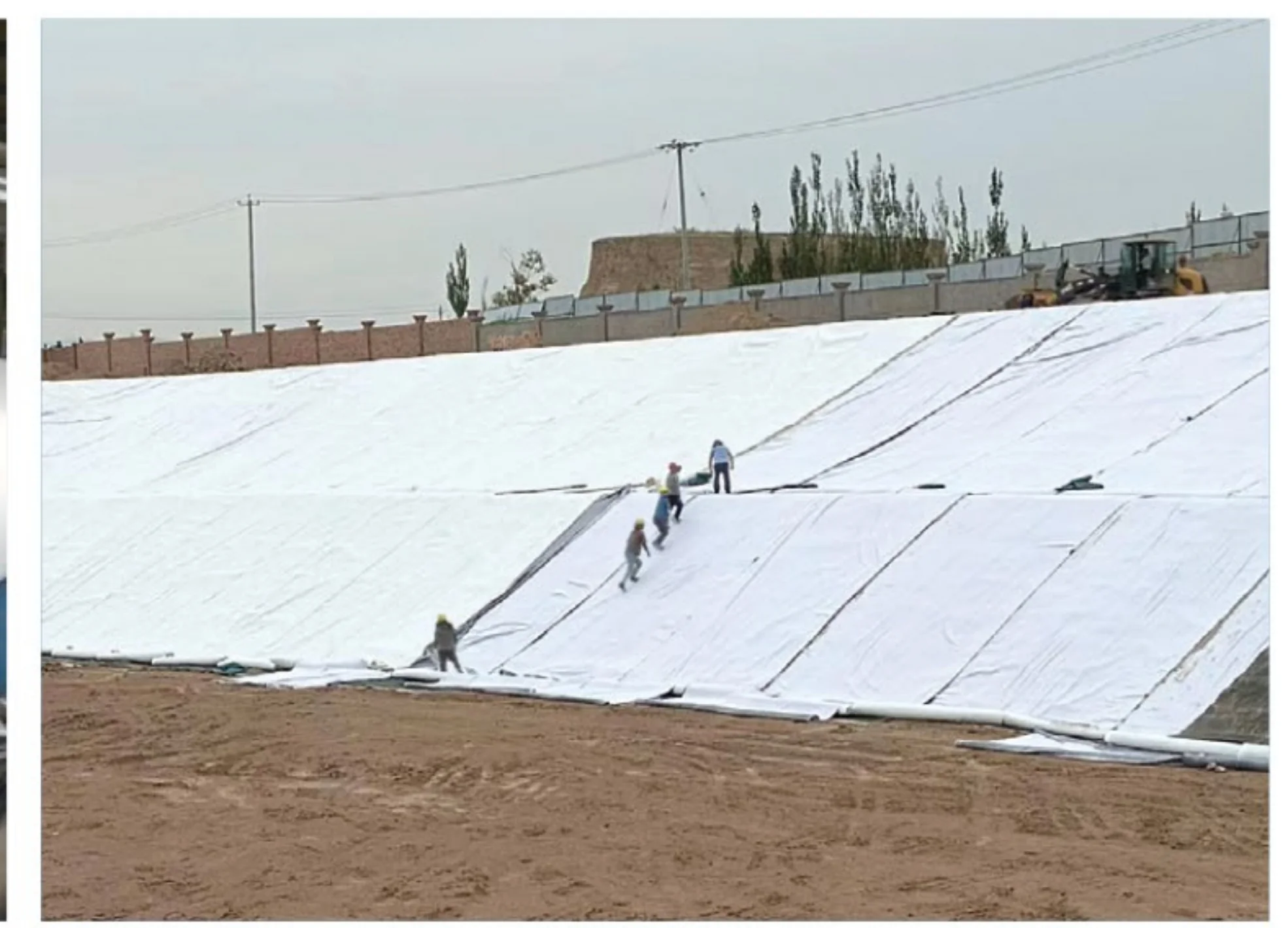
Water Conservancy & Hydropower
Geotextile functions can be considered in water-conservancy and hydropower engineering systems.
Roads, Railways & Tunnels
Separation, filtration, drainage, reinforcement and protection requirements may govern selection.
Ports, Airports & Coastal Engineering
Product review should reflect the site conditions and specified engineering function.
Environmental Protection Works
Material and performance requirements should be aligned with the environmental project specification.
Filtration, Separation & Drainage
Opening size, permeability and mechanical properties are relevant selection inputs.
Reinforcement & Protection
Areal mass, strength class, bursting and tearing properties should be reviewed against project needs.
TECHNICAL PARAMETERS
Staple Fiber Nonwoven Geotextile Performance Parameters
The performance-class table below follows the listed GB/T reference. JT/T 520-2004 is also identified as a reference standard; no separate JT/T parameter table is added here.
A. Availability & Dimensions
The listed range defines areal mass, roll width and length basis. No nominal thickness range is added.
- Areal mass
- 80–1500 g/m²
- Width
- 1–8 m
- Length
- According to customer requirements
B. GB/T 17638-2017 Performance Classes
Nominal breaking-strength classes and corresponding mechanical requirements.
| Property / Item | 3 kN/m | 5 kN/m | 8 kN/m | 10 kN/m | 15 kN/m | 20 kN/m | 25 kN/m | 30 kN/m | 40 kN/m |
|---|---|---|---|---|---|---|---|---|---|
| Longitudinal / transverse breaking strength kN/m | ≥3.0 | ≥5.0 | ≥8.0 | ≥10.0 | ≥15.0 | ≥20.0 | ≥25.0 | ≥30.0 | ≥40.0 |
| Elongation corresponding to nominal breaking strength % | 20–100 | ||||||||
| Bursting strength kN | ≥0.6 | ≥1.0 | ≥1.4 | ≥1.8 | ≥2.5 | ≥3.2 | ≥4.0 | ≥5.5 | ≥7.0 |
| Longitudinal / transverse tearing strength kN | ≥0.10 | ≥0.15 | ≥0.20 | ≥0.25 | ≥0.40 | ≥0.50 | ≥0.65 | ≥0.80 | ≥1.00 |
On smaller screens, scroll horizontally within the table. The first Property / Item column remains visible while the performance classes move horizontally.
C. Common Performance Indicators
Common requirements listed across the performance classes.
| Property / Item | Listed requirement |
|---|---|
| Areal mass deviation % | ±5% |
| Width deviation % | −0.5% |
| Thickness deviation % | ±10% |
| Equivalent opening size O90(O95) mm | 0.07–0.20 mm |
| Vertical permeability coefficient cm/s | K × (10−1–10−3) cm/s, K = 1.0–9.9 |
| Acid / alkali resistance — strength retention % | ≥80% |
| Oxidation resistance — strength retention % | ≥80% |
| UV resistance — strength retention % | ≥80% |
The UV strength-retention value is a listed performance requirement; it is not presented as a service-life or warranty statement.
Final product configuration and acceptance requirements should be confirmed against the project specification and contract.
SELECTION CONSIDERATIONS
Information to Define Before Product Selection and Procurement
A clear inquiry should identify the functional, dimensional and performance requirements that govern product review and acceptance.
Polymer material requirement
State the required polymer basis rather than assuming PP and PET are interchangeable for every specification.
Areal mass
Provide the stated areal mass and any project tolerance or acceptance requirement.
Strength class
Identify the nominal longitudinal and transverse breaking-strength class.
Roll dimensions
Confirm required roll width and length for procurement and handling planning.
Elongation
Define the applicable elongation requirement within the project specification.
Bursting & tearing strength
Identify the mechanical requirements associated with the selected class.
Equivalent opening size
Confirm the required opening-size criterion for the intended filtration function.
Vertical permeability
State the permeability requirement governing filtration or drainage review.
Project specification
Provide the governing specification and any referenced performance class.
Acceptance requirements
Define required inspection items, records and contractual acceptance criteria.
MANUFACTURING & QUALITY
Align Production and Quality Review with the Confirmed Requirement
Material requirements, dimensional requirements, performance criteria and the required inspection/documentation package should be confirmed before production and supply.
- Polymer material and stated areal mass
- Roll width, length and dimensional requirements
- Applicable performance class and common indicators
- Required inspection records and procurement documents
TECHNICAL DOCUMENTATION
Coordinate Technical Information with the Confirmed Specification
Technical information and project documentation should be discussed against the confirmed product specification and procurement requirements.
Request Technical Information
Share the material basis, areal mass, strength class, roll dimensions, filtration or permeability requirements, project specification and documentation needs.
FAQ
Staple Fiber Nonwoven Geotextile Questions
Concise product and procurement information for initial specification review.
What materials are listed for this geotextile?
PP or PET staple fiber is listed as the main raw-material basis. The required polymer material should be confirmed for the specific product and order.
What areal-mass range is listed?
The stated areal-mass range is 80–1500 g/m².
What roll widths are listed?
The listed width range is 1–8 m. Length is stated as according to customer requirements.
What functions does staple fiber nonwoven geotextile perform?
The listed functions include separation, filtration, drainage, reinforcement and protection.
Which reference standards are listed?
GB/T 17638-2017 and JT/T 520-2004 are listed. The performance-class table on this page is presented under the GB/T reference; no separate JT/T data table is added.
What information is needed to confirm a project specification?
Provide the polymer material requirement, areal mass, nominal strength class, roll dimensions, elongation, bursting and tearing requirements, equivalent opening size, vertical permeability, project specification and acceptance requirements.
PROJECT & PROCUREMENT SUPPORT
Discuss Your Geotextile Requirements
Share the material requirement, areal mass, strength class, roll dimensions, filtration or permeability requirements and project specification with our team.