
COMPOSITE GEOMEMBRANE
Composite Geomembrane for Seepage Control and Geotechnical Protection
A layered geosynthetic combining nonwoven geotextile with a geomembrane barrier for seepage control, separation, reinforcement and protection. Available configurations include one-geotextile/one-geomembrane, two-geotextile/one-geomembrane and multi-layer structures for project-specific requirements.
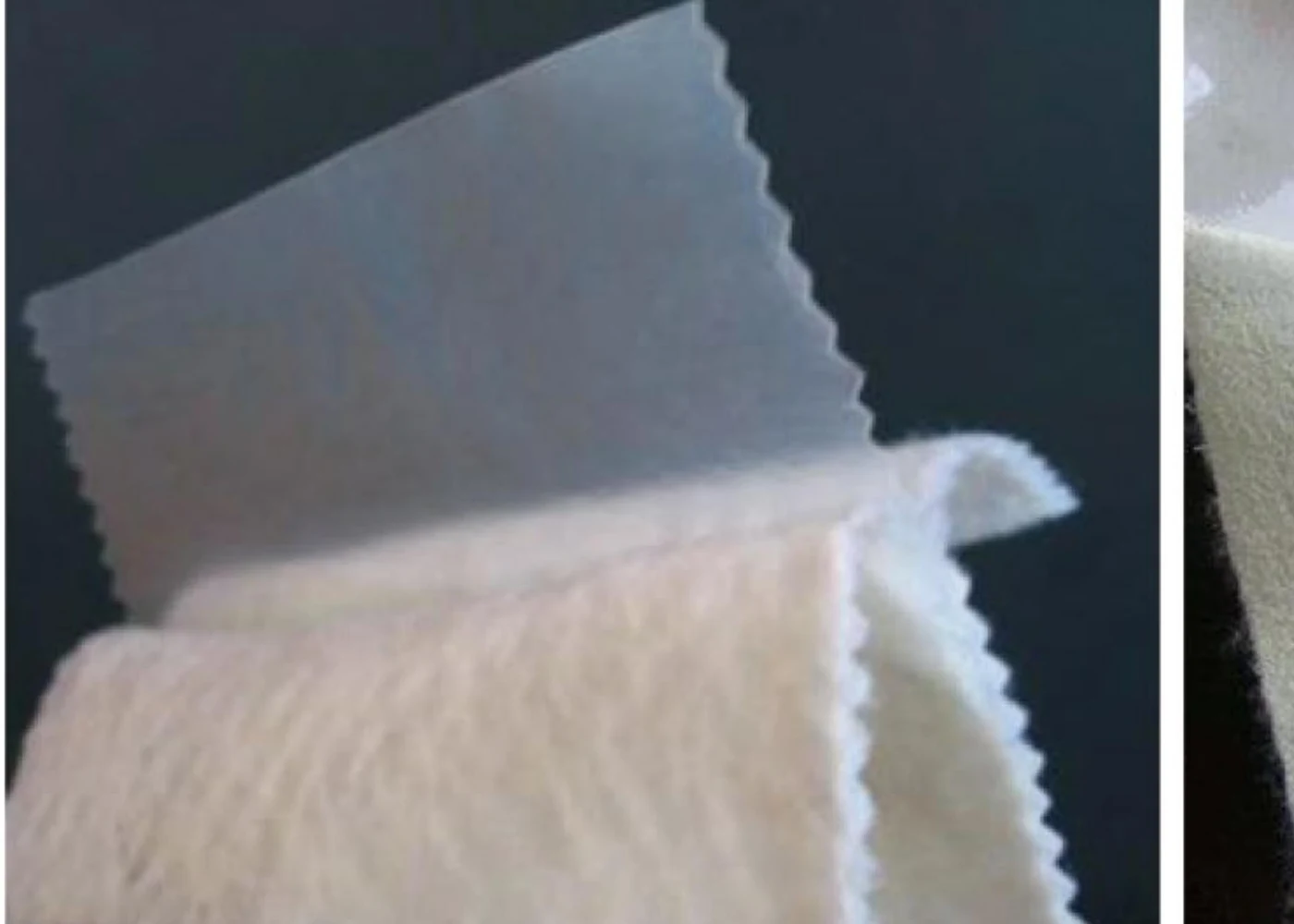
PRODUCT OVERVIEW
A Composite Barrier with Integrated Geotextile Protection
Composite geomembrane combines a membrane barrier with nonwoven geotextile layers that provide separation, drainage, reinforcement and protection functions. Layer configuration, membrane material and roll dimensions should be selected against the project design and contractual requirements.
Available membrane material options include polyethylene, PVC and other specified materials. The selected membrane material should be confirmed together with the complete layer configuration before procurement.
PRODUCT STRUCTURE
Composite Layer Configurations
The product combines nonwoven geotextile with polyethylene, PVC or other specified membrane materials. The selected material and complete layer sequence should be confirmed in the inquiry.
One Geotextile + One Geomembrane
A two-component arrangement with a nonwoven geotextile layer and one geomembrane layer.
Two Geotextiles + One Geomembrane
A geomembrane layer combined with nonwoven geotextile on two sides.
Multi-layer Configurations
A multi-layer configuration comprising three geotextiles and two geomembranes is also available for project-specific requirements.
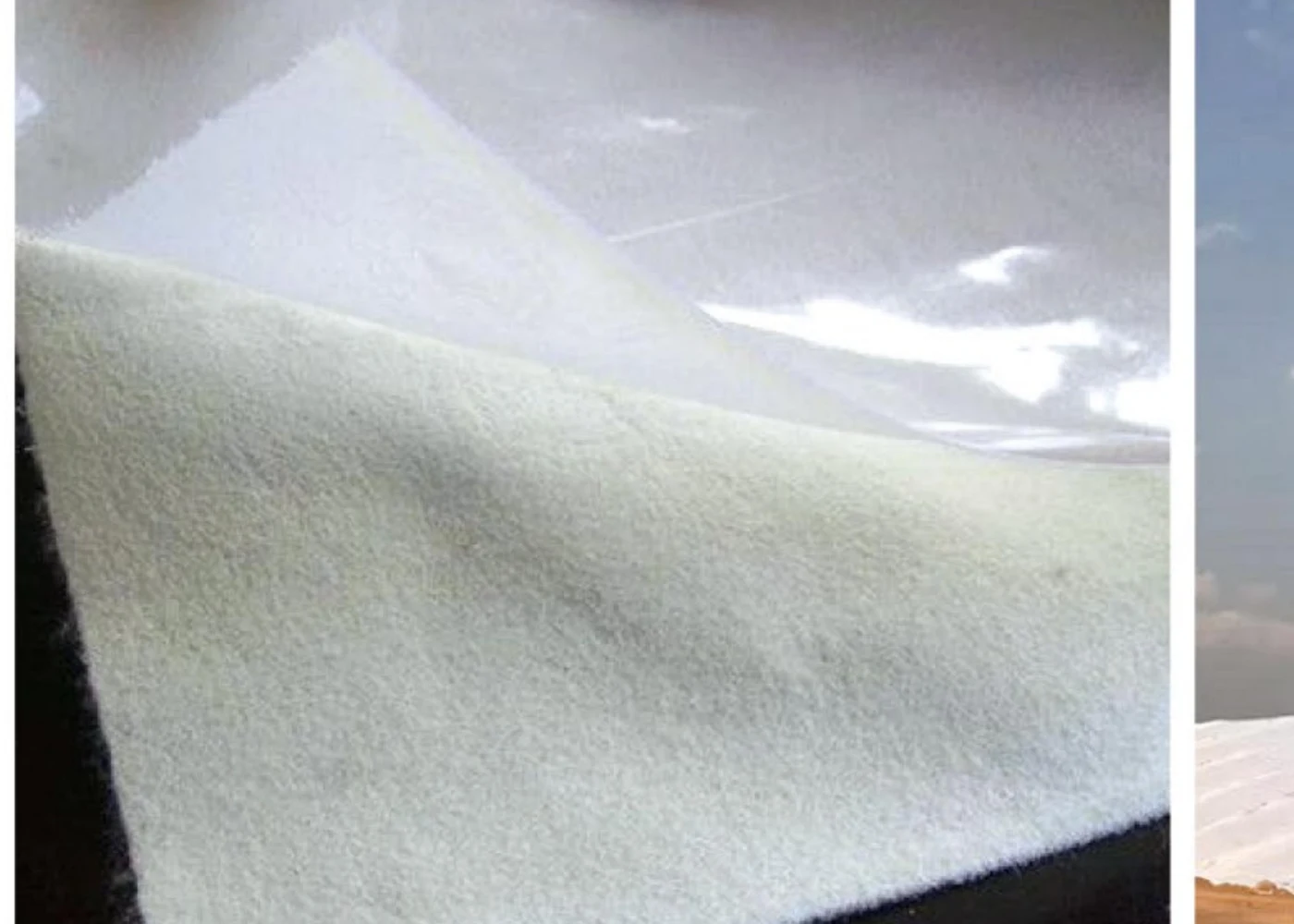
Confirm the Complete Layer Build-up
For quotation and technical review, state the intended layer arrangement, membrane material, stated areal mass, membrane thickness and project requirements.
APPLICATIONS
Engineering Applications
Composite geomembrane can support the following seepage-control and protection applications. Final suitability depends on the engineering design, selected configuration and contract requirements.
Canals & Dykes
Seepage-control and reinforcement applications for channels and dyke works.
Reservoirs & Rehabilitation Works
Plain-reservoir lining and seepage-control rehabilitation of existing reservoirs.
Rockfill Dams
Seepage-control applications within rockfill-dam engineering works.
Water-Conservancy Projects
Barrier and protection functions for water-conservancy project requirements.
Transportation Tunnels
Seepage-control applications associated with transportation-tunnel projects.
TECHNICAL PARAMETERS
Composite Geomembrane Configurations and Performance Parameters
Reference Standard: GB/T 17642-2008
A. Configuration & Dimensional Ranges
Stated areal mass and membrane thickness ranges for each composite configuration.
One Geotextile + One Geomembrane
- Stated areal mass
- 200–2000 g/m²
- Membrane thickness
- 0.1–2.0 mm
Two Geotextiles + One Geomembrane
- Stated areal mass
- 300–3000 g/m²
- Membrane thickness
- 0.1–2.5 mm
Three Geotextiles + Two Geomembranes
- Stated areal mass
- 500–1000 g/m²
- Membrane thickness
- 0.1–0.8 mm
- Width
- 1–6 m
- Length
- According to engineering design
B. GB/T 17642-2008 Performance Table
Nominal breaking-strength classes and corresponding performance requirements.
| Property / Item | 5 kN/m | 7.5 kN/m | 10 kN/m | 12 kN/m | 14 kN/m | 16 kN/m | 18 kN/m | 20 kN/m |
|---|---|---|---|---|---|---|---|---|
| Longitudinal / transverse breaking strength kN/m | ≥5 | ≥7.5 | ≥10 | ≥12 | ≥14 | ≥16 | ≥18 | ≥20 |
| Elongation corresponding to standard strength MD & CD · % | 30–100 | |||||||
| CBR bursting strength kN | ≥1.1 | ≥1.5 | ≥1.9 | ≥2.2 | ≥2.5 | ≥2.8 | ≥3.0 | ≥3.2 |
| Longitudinal / transverse tearing strength kN | ≥0.15 | ≥0.25 | ≥0.32 | ≥0.40 | ≥0.48 | ≥0.56 | ≥0.62 | ≥0.70 |
| Hydrostatic pressure resistance MPa | According to Table 2 below | |||||||
| Peel strength N/cm | ≥6 | |||||||
| Vertical permeability coefficient cm/s | According to design or contract requirements | |||||||
| Width deviation % | −1.0 | |||||||
On smaller screens, scroll horizontally within the table. The first Property / Item column remains visible while the numerical classes move horizontally.
C. Hydrostatic Pressure Table
Specified minimum hydrostatic-pressure resistance by membrane thickness for one-geotextile/one-geomembrane and two-geotextile/one-geomembrane configurations.
| Configuration | 0.2 mm | 0.3 mm | 0.4 mm | 0.5 mm | 0.6 mm | 0.7 mm | 0.8 mm | 1.0 mm |
|---|---|---|---|---|---|---|---|---|
| One geotextile + one geomembrane MPa | ≥0.4 | ≥0.5 | ≥0.6 | ≥0.8 | ≥1.0 | ≥1.2 | ≥1.4 | ≥1.6 |
| Two geotextiles + one geomembrane MPa | ≥0.5 | ≥0.6 | ≥0.8 | ≥1.0 | ≥1.2 | ≥1.4 | ≥1.6 | ≥1.8 |
Membrane thickness is listed across the column headings; hydrostatic-pressure values are in MPa.
Final configuration and acceptance requirements should be confirmed against the project specification and contract.
ENGINEERING CONSIDERATIONS
Information Required for Product Selection and Procurement
The inquiry should identify the intended configuration and the project requirements that govern product review and acceptance.
Layer configuration
State whether the project requires one geotextile + one geomembrane, two geotextiles + one geomembrane or a multi-layer arrangement.
Membrane material
Identify the required membrane material rather than assuming a specific polyethylene grade.
Stated areal mass
Provide the specified areal mass and clarify how it is defined in the project documents.
Membrane thickness
Confirm the nominal thickness and any project acceptance requirement.
Roll width and length
Define required dimensions in relation to project design, handling and procurement planning.
Mechanical requirements
Identify tensile, CBR, tear and peel requirements applicable to the selected class.
Hydrostatic pressure requirement
Confirm the applicable structure, membrane thickness and minimum pressure requirement.
Specification and acceptance
Provide the governing project specification, contract criteria and required documentation package.
PRODUCTION & QUALITY
Production and Quality Review for Project Supply
Product configuration, inspection items, acceptance criteria and the required documentation package should be agreed before production and supply.
Production planning can be coordinated with the required inspection items, acceptance criteria and documentation package for the confirmed composite configuration.
TECHNICAL DOCUMENTATION
Coordinate Documentation Against the Confirmed Configuration
Technical documentation requirements can be reviewed against the confirmed configuration, project specification and procurement scope.
Request Technical Information
Technical information and project documentation can be discussed against the confirmed product configuration and procurement requirements.
FAQ
Composite Geomembrane Questions
Key information for configuration review, specification alignment and procurement planning.
What composite geomembrane structures are listed?
Available structures include one geotextile + one geomembrane, two geotextiles + one geomembrane and multi-layer configurations. Three geotextiles + two geomembranes is included as a multi-layer option.
What membrane materials are identified?
Membrane material options include polyethylene, PVC and other specified materials. The required material should be clearly identified in the project specification or inquiry.
What width range is listed?
The available width range is 1–6 m.
How is roll length determined?
Roll length is determined according to the engineering design.
Which performance items are listed under GB/T 17642-2008?
The performance table covers breaking strength, corresponding elongation, CBR bursting strength, tearing strength, hydrostatic-pressure resistance, peel strength, vertical permeability coefficient and width deviation.
What information should be included in an inquiry?
State the layer structure, membrane material, stated areal mass, membrane thickness, roll dimensions, application conditions, performance requirements, project specification and documentation needs.
PROJECT & PROCUREMENT SUPPORT
Discuss Your Composite Geomembrane Requirements
Share the required layer structure, membrane material, areal mass, membrane thickness, roll dimensions, application conditions and project specification with our team.