Tailings Geomembrane Installation Requirements for Storage Facilities
Mining tailings storage facilities require reliable containment systems to reduce the risk of seepage, protect groundwater, and support long-term operational safety. A properly selected and professionally installed HDPE geomembrane liner is a critical component of a tailings dam lining system.
This guide outlines the main geomembrane installation requirements for tailings storage facilities, from subgrade preparation to welding inspection and final acceptance.
Tailings Geomembrane Installation: Design Requirements
Before installation begins, the project team should confirm the liner design, approved drawings, material specifications, panel layout, anchoring details, and quality control plan.
The selected geomembrane should match the project’s chemical exposure, temperature range, UV exposure, subgrade conditions, hydraulic head, and service-life requirements. For many tailings applications, HDPE geomembrane is selected for its chemical resistance, durability, and low permeability.
Prepare the Subgrade Carefully
The subgrade must be smooth, stable, compacted, and free of sharp stones, roots, construction debris, standing water, and other objects that could damage the liner.
Any soft zones, voids, excessive moisture, or uneven areas should be corrected before geomembrane deployment. Where required by design, a geotextile cushion layer may be installed beneath the geomembrane to provide additional puncture protection.
Inspect Geomembrane Materials Before Deployment
Each roll of HDPE geomembrane should be checked before use. Confirm the roll number, thickness, width, surface type, and material certification against the approved project requirements.
The liner should be stored on clean, level ground and protected from contamination, mechanical damage, and unnecessary exposure before installation. Damaged material must not be installed without project approval.
Deploy Panels According to the Approved Layout
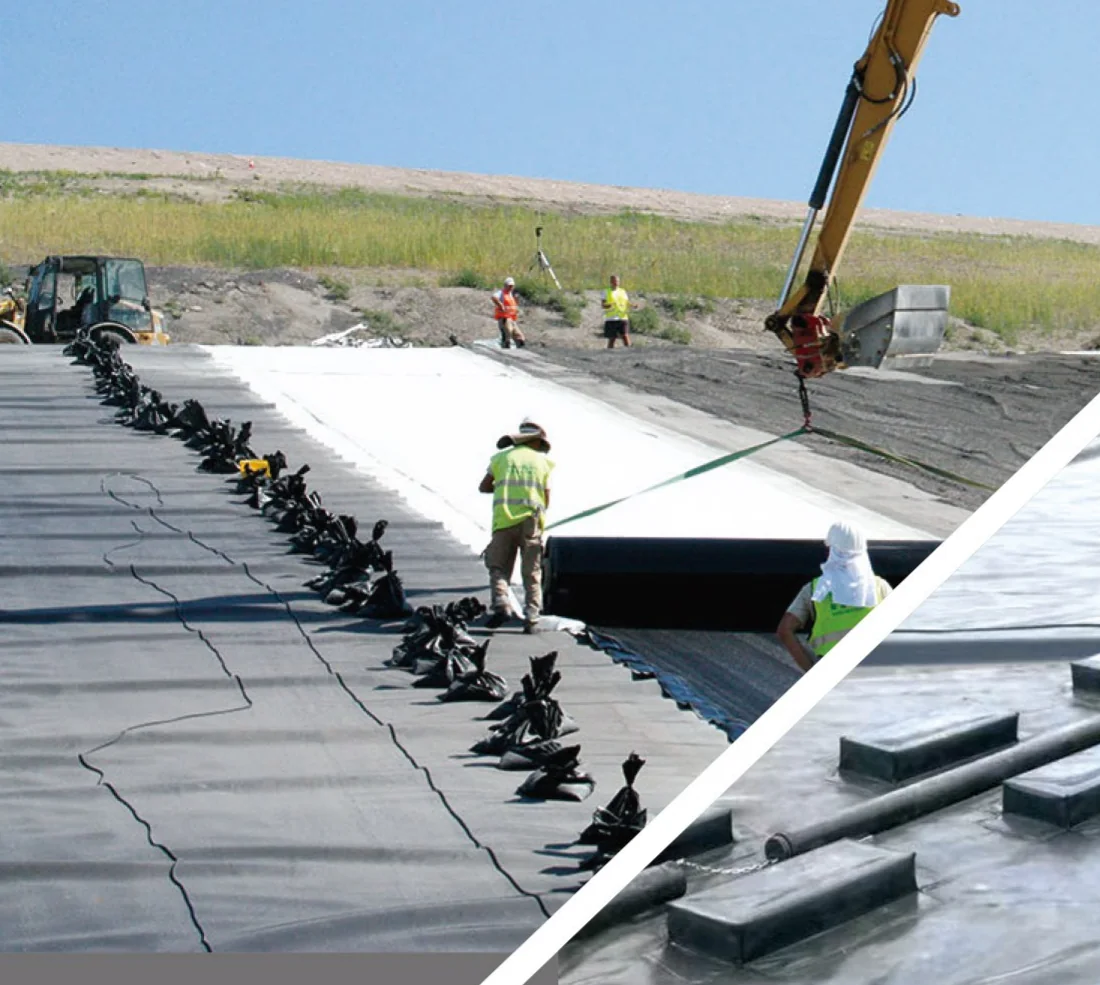
Geomembrane panels should be deployed according to the approved panel layout plan. The installation direction should minimize seams in high-stress or high-flow areas whenever possible.
Avoid excessive wrinkles, bridging, or tension in the liner. Allow appropriate slack for temperature changes and settlement. Personnel should avoid dragging equipment directly across the geomembrane surface.
Control Weather Conditions During Installation
Geomembrane installation and welding should be performed only under suitable weather conditions. Rain, standing water, strong wind, dust, and extreme temperatures can affect welding quality and site safety.
The installation team should monitor ambient temperature, liner temperature, wind conditions, and surface cleanliness. Welding areas must remain clean and dry.
Perform Trial Welds Before Production Welding
Before production welding begins, the welding technician should perform trial welds using the same geomembrane material and similar site conditions.
Trial welds verify that the welding machine settings, including temperature, speed, and pressure, produce acceptable seam strength. Production welding should begin only after the trial weld passes the required tests.
Use Qualified Welding Methods
For HDPE geomembrane installation, dual-track hot wedge welding is commonly used for long field seams because it creates two weld tracks with an air channel between them. Extrusion welding is commonly used for repairs, patches, detail work, pipe penetrations, and T-joints.
All welding equipment should be maintained, calibrated where required, and operated by trained technicians. Seam surfaces must be clean and properly aligned before welding.
Conduct Non-Destructive Seam Testing
Every accessible field seam should be inspected and tested using appropriate non-destructive methods.
For dual-track seams, an air pressure test is typically used to check the continuity of the seam channel. Vacuum box testing may be used for extrusion welds, patches, and other details where air testing is not possible.
Any failed test area must be clearly marked, repaired, and retested before acceptance.
Complete Destructive Testing and Documentation
Destructive seam samples should be taken at the required frequency and tested for peel and shear strength in accordance with the approved project specifications.
Quality records should include geomembrane roll numbers, panel layout drawings, weather conditions, trial weld results, seam test logs, repair records, destructive test results, and final inspection reports. Complete documentation is essential for project traceability and long-term asset management.
Protect the Finished Liner System
After installation and acceptance, the geomembrane must be protected from damage caused by subsequent construction activities. Cover materials, drainage layers, ballast, or protective geotextiles should be placed carefully to avoid puncture or displacement.
A final inspection should be completed before the liner system is covered or placed into service.
Choose the Right Geomembrane System for Your Tailings Project
A successful tailings storage facility liner system depends on correct material selection, experienced installation, disciplined welding procedures, and rigorous quality assurance.
SLG Geosynthetics supplies HDPE geomembrane, textured geomembrane, geotextile, composite geomembrane, and drainage solutions for mining, tailings containment, heap leach pads, and other demanding environmental projects.
Contact our team to discuss your tailings dam lining requirements, required specifications, and project conditions.